Training for the accredited laboratory: LC-MS, quality system, AI literacy.
7,453 hours of training delivered, in the classroom, in the laboratory and remotely. Courses for those working in LC-MS, for those who keep the quality system standing and for those who must support the AI literacy that Article 4 of the EU AI Act requires of every organization: from the staff who use it up to the «Laboratory AI Lead» qualification. For accredited laboratories and for companies’ quality departments and in-house laboratories. With final learning assessment and certificate of attendance.
Of training delivered, in the classroom and in the laboratory.
Certificate of attendance
Final learning assessment and certificate of attendance with program and hours.
Live, wherever you want
At DaSP in Milan, with classroom and LC-MS demo laboratory; in your laboratory; remotely. Always with the trainer.
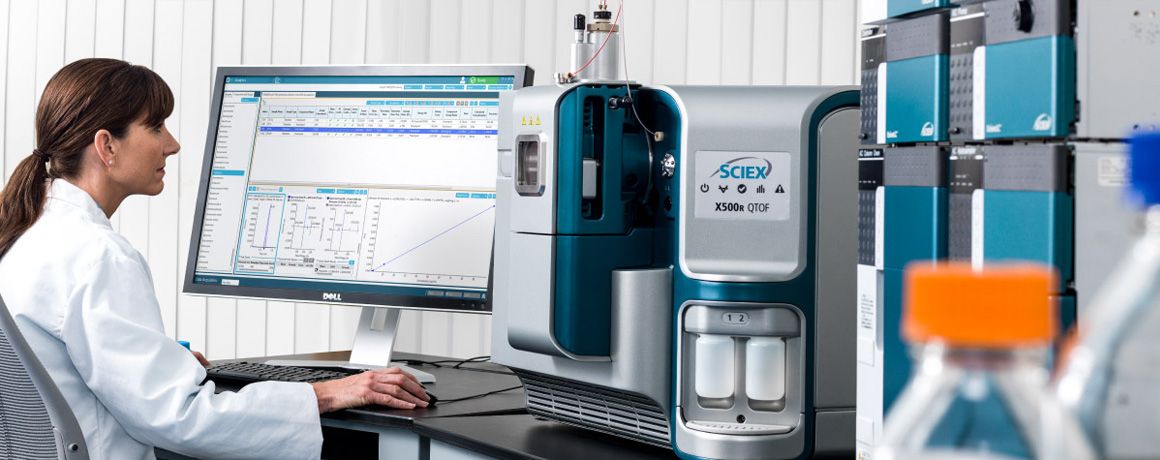
Operator working with a high-resolution LC-MS system
The DaSP Training catalog
Four areas, one area at a time. Each course opens in its own sheet: objective, who it is for, topics, formats, certificate of attendance.
All courses are held live, with the trainer: remotely, at our Milan office or in your laboratory. No recorded courses. Indicative duration: refined course by course, with you. No prices in the catalog.
Area
Role
1
AI literacy for organizations
The Article 4 program: analysis of current uses, role-based training, elements for the register. For accredited laboratories and companies’ quality departments.
Five courses, from the staff who need to know about AI to those who supervise it, assess it and verify it; with the ISO/IEC 42001 course of the Quality area.
3
Laboratory AI Lead
Eight four-hour modules, first session free; qualification with M0, M2, M4, M6 and an online exam within 18 months. The first Italian school that trains the Laboratory AI Lead.
Further requirements apply to high-risk systems: that is the AI Act obligations assessment, a separate service. The AI Act obligations assessment →
Course
LevelPath
Indicative duration
Open the sheet
Foundation
1 day
ObjectiveUnderstanding what happens between injection and peak: ion source, analyzer, detector, and the choices that decide a good signal.
Who it is forThose starting to work on an LC-MS/MS system or wanting to put the basics back in order.
Topics
Ionization and ion source: parameters and their effect
Quadrupole analyzers and acquisition modes
Coupled liquid chromatography: columns, mobile phases, gradients
The chromatogram: peak, noise, area, integration
In the laboratory: start-up, tuning, first acquisition
CertificateFinal learning assessment and certificate of attendance with program and hours: a training record that stands up to audit.
The practical laboratory part takes place on site, in Milan in the LC-MS demo laboratory or in your laboratory.
Foundation to advanced
1 day
ObjectiveBuilding and reading a quantitative MRM method: transitions, curves, controls.
Who it is forAnalysts and technical managers who quantify in routine.
Matrix effects: how to see them and how to manage them
In the laboratory: MRM method on real samples
CertificateFinal learning assessment and certificate of attendance with program and hours: a training record that stands up to audit.
The practical laboratory part takes place on site, in Milan in the LC-MS demo laboratory or in your laboratory.
Advanced
1 day
ObjectiveBuilding a method from scratch on your own system, with reasoned choices.
Who it is forTechnical managers and analysts who develop methods.
Topics
Choosing the column and the mobile phases
Source and analyzer parameters
Scheduled MRM
Polarity switching
In the laboratory: development on one of the laboratory’s analytes
CertificateFinal learning assessment and certificate of attendance with program and hours: a training record that stands up to audit.
The practical laboratory part takes place on site, in Milan in the LC-MS demo laboratory or in your laboratory.
Foundation
1 day
ObjectiveKeeping the instrument in the conditions in which it was qualified and recognizing problems before downtime.
Who it is forThose in charge of the instrument in the laboratory.
Topics
Ion source cleaning
Pumps and vacuum system
Calibration and performance checks
Correct start-up and shutdown
Preventing downtime and first interventions
CertificateFinal learning assessment and certificate of attendance with program and hours: a training record that stands up to audit.
The practical laboratory part takes place on site, in Milan in the LC-MS demo laboratory or in your laboratory.
Advanced
1 day
ObjectiveSetting up an untargeted analysis on HRMS instruments, high-resolution mass spectrometry, and reprocessing data already acquired when a new question comes up.
Who it is forLaboratories that have to look for what they do not know in advance, or answer new questions on yesterday’s data.
Topics
Accurate mass, resolution, calibration
Data-dependent and data-independent acquisition
Spectral libraries and identification criteria
Reprocessing software: searching data already acquired without repeating the analysis
In the laboratory: untargeted analysis on a real matrix and reprocessing
CertificateFinal learning assessment and certificate of attendance with program and hours: a training record that stands up to audit.
The practical laboratory part takes place on site, in Milan in the LC-MS demo laboratory or in your laboratory.
—
1 day
ObjectiveBuilding and maintaining a multiresidue method that stands up to the SANTE criteria.
Who it is forFood safety laboratories.
Topics
Building the method and choosing the transitions
Optimization and adding new molecules
SANTE criteria: ion ratio, LOQ, linearity
Matrix effects and compensation strategies
In the laboratory: real samples
CertificateFinal learning assessment and certificate of attendance with program and hours: a training record that stands up to audit.
The practical laboratory part takes place on site, in Milan in the LC-MS demo laboratory or in your laboratory.
—
1 day
ObjectiveQuantifying PFAS in water at the sensitivity the legislation requires.
Who it is forEnvironmental and water laboratories.
Topics
MRM method for PFAS
Linear and branched isomers
Blanks and background contamination
Sensitivity required by the legislation
In the laboratory: method and real samples
CertificateFinal learning assessment and certificate of attendance with program and hours: a training record that stands up to audit.
The practical laboratory part takes place on site, in Milan in the LC-MS demo laboratory or in your laboratory.
—
1 day
ObjectiveReaching the decree’s limits, sum of PFAS and total PFAS, without solid-phase extraction, with high-sensitivity direct injection.
Who it is forLaboratories that analyze drinking water.
Topics
The regulatory framework: Italian Legislative Decree 18/2023 transposing Directive 2020/2184
The parameters and limits of the decree
Why direct injection: time, cost, SPE contamination
Instrument sensitivity requirements
Blanks and background contamination; branched isomers
In the Milan demo laboratory: direct injection method, calibration at the required levels, verification of LOQ and acceptance criteria, real samples
CertificateFinal learning assessment and certificate of attendance with program and hours: a training record that stands up to audit.
The practical laboratory part takes place on site, in Milan in the LC-MS demo laboratory or in your laboratory.
—
1 day
ObjectiveQuantifying glyphosate, AMPA, glufosinate, fosetyl, ethephon, chlormequat and analogues in a single run, without derivatization.
Who it is forFood safety laboratories with the polar compounds on a separate method.
Topics
Why polar compounds escape multiresidue methods
Stationary phases and conditions for polar compounds
The QuPPe method as a reference
MRM and SANTE criteria
In the laboratory: building the method on real samples
CertificateFinal learning assessment and certificate of attendance with program and hours: a training record that stands up to audit.
The practical laboratory part takes place on site, in Milan in the LC-MS demo laboratory or in your laboratory.
—
1 day
ObjectiveSetting up a rapid screening of drugs and drugs of abuse on biological matrices, with confirmation.
Who it is forClinical and toxicology laboratories.
Topics
Targeted and untargeted screening in high resolution, spectral libraries
Rapid sample preparation
Turnaround times and organization of the workflow
Identification criteria
In the laboratory: acquisition, library search, reporting
CertificateFinal learning assessment and certificate of attendance with program and hours: a training record that stands up to audit.
The practical laboratory part takes place on site, in Milan in the LC-MS demo laboratory or in your laboratory.
—
1 day
ObjectiveQuantifying proteins and biopharmaceuticals via peptides, with sequence confirmation.
Who it is forPharma and biopharma laboratories.
Topics
Tryptic digestion
Proteotypic peptides
Post-translational modifications
Peptide sequencing by mass spectrometry
In the laboratory: a biopharmaceutical from sample to data
CertificateFinal learning assessment and certificate of attendance with program and hours: a training record that stands up to audit.
The practical laboratory part takes place on site, in Milan in the LC-MS demo laboratory or in your laboratory.
—
1 day
ObjectiveBuilding a reliable multi-steroid panel at the required sensitivities.
Who it is forClinical and toxicology laboratories.
Topics
The multi-steroid panel
Required sensitivities and derivatization: when yes, when no
Isobaric interferences
Calibration and quality control
In the laboratory: panel on real samples
CertificateFinal learning assessment and certificate of attendance with program and hours: a training record that stands up to audit.
The practical laboratory part takes place on site, in Milan in the LC-MS demo laboratory or in your laboratory.
—
half a day or 1 day
ObjectiveTaking a method from development to a documented validation that can be defended in audit.
Who it is forTechnical managers and quality managers.
RoleTechnical manager, Quality manager
Topics
Requirements of clause 7.2.2
Parameters: selectivity, linearity and range, LOD and LOQ, precision, trueness, robustness, matrix effects
Validation plan and acceptance criteria
Estimating uncertainty from validation data
The dossier
In the laboratory: validation on a real MRM method, data processing, writing the dossier
CertificateFinal learning assessment and certificate of attendance with program and hours: a training record that stands up to audit.
The practical laboratory part takes place on site, in Milan in the LC-MS demo laboratory or in your laboratory.
Where the agents come inThe agent prepares the tables and the completeness checks of the validation dossier; the judgment on the method stays with whoever validates it.
—
half a day or 1 day
ObjectiveEstimating uncertainty and using it in the laboratory’s decision rule.
Who it is forTechnical managers and quality managers.
RoleTechnical manager, Analysts and operators
Topics
The uncertainty budget
From validation data to uncertainty
The decision rule
The statement of conformity in the test report
CertificateFinal learning assessment and certificate of attendance with program and hours: a training record that stands up to audit.
—
half a day or 1 day
ObjectiveClosing nonconformities that keep coming back, with real causes and checks that hold.
Who it is forQuality managers and management.
RoleQuality manager
Topics
Finding and recording
Root cause analysis
Corrective actions and responsibilities
Effectiveness check
CertificateFinal learning assessment and certificate of attendance with program and hours: a training record that stands up to audit.
Where the agents come inThe agent prepares the finding, cause and proposal; the decision stays human.
—
half a day or 1 day
ObjectiveMaking the internal audit a working tool, not a formality.
Who it is forQuality managers and internal auditors.
RoleQuality manager, Management
Topics
Audit program and audit plan
Conducting the audit and collecting evidence
The audit report
From the audit to the actions
CertificateFinal learning assessment and certificate of attendance with program and hours: a training record that stands up to audit.
Where the agents come inThe LABNEXUS agents prepare the evidence file; the auditor verifies and signs.
—
half a day or 1 day
ObjectiveKeeping the traceability of measurements under control and demonstrating it.
Who it is forTechnical managers and quality managers.
RoleTechnical manager, Analysts and operators
Topics
Metrological traceability
Calibration program
Metrological confirmation
Records and evidence
CertificateFinal learning assessment and certificate of attendance with program and hours: a training record that stands up to audit.
Where the agents come inThe agent alerts on deadlines; the manager decides.
—
half a day or 1 day
ObjectiveGoverning the sample from sampling to testing according to clauses 7.3 and 7.4 of ISO/IEC 17025.
Who it is forQuality managers and sampling staff.
RoleTechnical manager, Analysts and operators
Topics
Sampling plan and procedure
Identification, transport, storage
Sampling records
Handling of test items
CertificateFinal learning assessment and certificate of attendance with program and hours: a training record that stands up to audit.
Where the agents come inThe agent prepares the sample acceptance records; verification stays with a person.
—
half a day or 1 day
ObjectiveIdentifying the risks to impartiality and to the result, and keeping them under control.
Who it is forManagement and quality managers.
RoleManagement, Quality manager
Topics
Risks and opportunities in ISO/IEC 17025
Impartiality and confidentiality
Records and review
CertificateFinal learning assessment and certificate of attendance with program and hours: a training record that stands up to audit.
—
half a day or 1 day
ObjectiveBringing the LIMS into the quality system with requirements, validation and evidence.
Who it is forQuality managers and IT managers.
RoleQuality manager, Technical manager
Topics
Quality system requirements for the LIMS
Validation of the configuration
Data integrity
Records and audit trail
CertificateFinal learning assessment and certificate of attendance with program and hours: a training record that stands up to audit.
Where the agents come inATLAS records; the AI modules are the LABNEXUS agents.
—
1 day
ObjectiveUnderstanding what ISO/IEC 42001 requires and how it integrates with the accredited laboratory’s quality system, without duplicating documents and reviews.
Who it is forManagement and quality managers of accredited laboratories and of companies with certified systems that use or develop AI systems.
RoleManagement, Quality manager, Those who supervise AI
Topics
Structure of ISO/IEC 42001 and points in common with ISO/IEC 17025
Policy, objectives, roles
AI impact and risk assessment
Controls and records
Integrated internal audit and review
Exercise: the integration map for your system
CertificateFinal learning assessment and certificate of attendance with program and hours: a training record that stands up to audit.
AI Lead
4 hours
ObjectiveGiving artificial intelligence a place in the accredited laboratory’s quality system: who decides, with what rules, with what risk.
Who it is forManagement and quality managers.
RoleManagement, Quality manager
Topics
Roles and responsibilities
The laboratory’s AI policy
A risk scale for the uses of AI
CertificateFinal learning assessment and certificate of attendance with program and hours: a training record that stands up to audit.
Module of the «Laboratory AI Lead» qualification.
AI Lead
4 hours
ObjectiveUnderstanding what an artificial intelligence model really does, and what it does not, in the words of the laboratory.
Who it is forAll staff.
RoleAll staff
Topics
What a model is and how it fails
Correct uses and uses to avoid
The minimum vocabulary
CertificateFinal learning assessment and certificate of attendance with program and hours: a training record that stands up to audit.
AI Lead
4 hours
ObjectiveTreating an artificial intelligence tool like any other instrument of the accredited laboratory: requirements, tests, evidence.
Who it is forQuality managers and technical managers.
RoleTechnical manager, Quality manager
Topics
Requirements and acceptance criteria
Qualification tests
Evidence and review
CertificateFinal learning assessment and certificate of attendance with program and hours: a training record that stands up to audit.
Module of the «Laboratory AI Lead» qualification.
AI Lead
4 hours
ObjectiveTreating prompts and outputs as quality system records.
Who it is forQuality managers and staff who use AI tools.
RoleQuality manager, Analysts and operators
Topics
Prompts and outputs as records
Data integrity
Retention and review
CertificateFinal learning assessment and certificate of attendance with program and hours: a training record that stands up to audit.
AI Lead
4 hours
ObjectiveManaging nonconformities that involve artificial intelligence tools and preparing for the audit.
Who it is forQuality managers and internal auditors.
RoleQuality manager
Topics
Nonconformities with AI involved
Evidence for the audit
What the assessor asks
CertificateFinal learning assessment and certificate of attendance with program and hours: a training record that stands up to audit.
Module of the «Laboratory AI Lead» qualification.
AI Lead
4 hours
ObjectiveBringing artificial intelligence into the management review with indicators that mean something.
Who it is forManagement and quality managers.
RoleManagement
Topics
Indicators for the uses of AI
The management review
Decisions and records
CertificateFinal learning assessment and certificate of attendance with program and hours: a training record that stands up to audit.
AI Lead
4 hours
ObjectiveWriting requests to artificial intelligence that produce verifiable results, within the scope decided by the laboratory.
Who it is forStaff who use AI tools in their everyday work.
RoleThose who use AI in their work
Topics
Structure of a request
Limits and checks
Examples from the laboratory
CertificateFinal learning assessment and certificate of attendance with program and hours: a training record that stands up to audit.
Module of the «Laboratory AI Lead» qualification.
AI Lead
4 hours
ObjectiveSeeing the uses of artificial intelligence along the sample’s journey, with the checks in the right place.
Who it is forAll staff.
RoleAll staff
Topics
Acceptance and records
Documents and procedures
Test reports and verification
CertificateFinal learning assessment and certificate of attendance with program and hours: a training record that stands up to audit.
By role
4 hours
ObjectiveUnderstanding what an AI system used at work does and does not do, what risks it carries and what internal rules apply, as Article 4 of the AI Act requires.
Who it is forAll staff of accredited laboratories, quality departments and companies’ in-house laboratories who use AI tools, even occasionally.
RoleAll staff
Topics
How a generative AI system works, in the words of the job
Opportunities and limits: inaccurate answers, invented data, confidentiality
The internal rules: permitted tools, data that must not be entered, when a person is needed
Exercises on the organization’s cases
CertificateFinal learning assessment and certificate of attendance with program and hours: a training record that stands up to audit.
By role
4 hours
ObjectiveWorking with the AI tools in use in the organization knowing what to ask, how to check the output and when to stop.
Who it is forThose who use generative assistants, AI functions in software or agents in their process.
RoleThose who use AI in their work
Topics
Effective and verifiable instructions
Checking the output before it enters a document or a process
Data, versions and traceability of what is produced with AI
Typical errors and how to report them
Practical test on the customer’s cases
CertificateFinal learning assessment and certificate of attendance with program and hours: a training record that stands up to audit.
By role
1 day
ObjectiveExercising human oversight over the organization’s AI systems and giving AI a written governance: roles, policy, thresholds, registers.
Who it is forThose accountable for the use of AI and those who verify outputs before they take effect.
RoleThose who supervise AI, Management
Topics
What it means to supervise an AI system
Roles and responsibilities, from management to those who verify
Policy, confidence thresholds, override and pause
Registers and review
Exercise: the oversight program for one of the organization’s processes
CertificateFinal learning assessment and certificate of attendance with program and hours: a training record that stands up to audit.
By role
1 day
ObjectiveIdentifying, weighing and treating the risks of an AI system before and during use, with a written, repeatable method.
Who it is forQuality managers, risk managers, those introducing AI systems into processes.
RoleThose who supervise AI, Quality manager
Topics
Inventory of the AI systems in use
Sources of risk: data, model, use, people
Risk scale and acceptance criteria
Treatment measures and human checkpoints
Exercise on a real system of the customer
CertificateFinal learning assessment and certificate of attendance with program and hours: a training record that stands up to audit.
By role
1 day
ObjectiveVerifying, with an internal audit, that AI systems and the processes that use them comply with the organization’s rules and the applicable requirements.
Who it is forInternal auditors, quality managers, compliance managers.
RoleQuality manager, Those who supervise AI
Topics
What is verified of an AI system: documents, registers, decisions
Evidence and sampling
Findings, nonconformities and corrective actions
The audit report on AI systems
Exercise: audit plan for a process with AI
CertificateFinal learning assessment and certificate of attendance with program and hours: a training record that stands up to audit.
No course with these filters: try another format or level.
A course on your instruments, with your samples, in your laboratory.
Choose an area and where to hold it: the plan is composed with the catalog courses. From the sheet to the proposal for your laboratory.