
Tractor treating a farm field

Analyze · applications

LC-MS analytical applications by sector

Four sectors, their matrices and their standards. First the analytical question, then the technology that answers it.

Treatment of a farm field: where the samples for residue analysis come from

This page is not a catalog. For each sector we describe the analytical challenge laboratories bring to us, how DaSP addresses it and with which technologies. The method is born from the matrix and the limit to be met, not from the instrument.

Full application notes, with operating conditions and data, are available on request.

  • 457 analytical methods developed in Italian laboratories
  • 229 feasibility studies
  • SCIEX official channel partner since 2011, the first in Italy

The four sectors

For each sector: the challenge, the DaSP approach, the technologies. Alongside, a photo of the work and real data in a frame.

Food safety

The analytical challenge

Hundreds of residues and contaminants to be determined in complex matrices — fruit, vegetables, cereals, processed foods — at ever lower legal limits, with confirmation criteria to be met in every test report.

The DaSP approach

A multiresidue method built on the laboratory’s matrix: MRM transitions, ion ratios and limits of quantification verified on real samples. Then optimization over time, with new molecules added to the list without rebuilding the method.

Technologies used

Triple quadrupole and QTRAP systems for targeted quantitation; QTOF systems for screening of unexpected compounds.

Ask for the application note
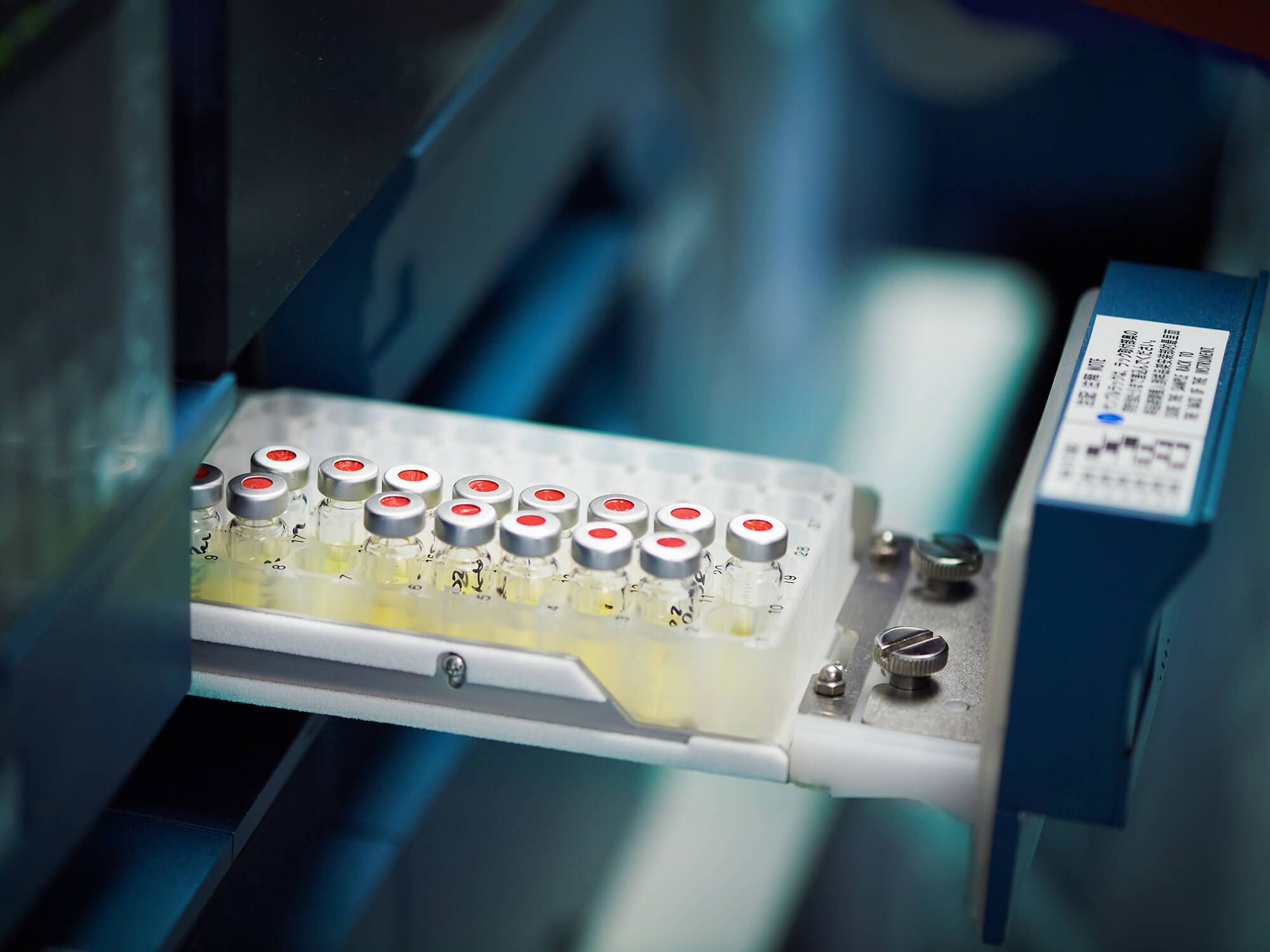
Vial with a red cap in the autosampler tray, in warm light

XIC · MRM

XIC chromatogram of 1,064 MRM transitions of pesticides and herbicides, in a single seven-minute runData: SCIEX, official application material
Chromatogram of 1,064 overlaid MRM transitions of pesticides and herbicides, with the main peak at 3.9 minutes

XIC chromatogram of 1,064 MRM transitions of pesticides and herbicides, in a single seven-minute run · Data: SCIEX, official application material

Environment

The analytical challenge

Water, soil and sediment with contaminants to be quantified at nanograms per liter: PFAS, pesticides, pharmaceuticals and their metabolites, in matrices that change from one sampling point to the next.

The DaSP approach

Methods that stand up to matrix effects and background blanks, with the sensitivity the standard requires and a quality control plan the laboratory can sustain every day.

Technologies used

High-sensitivity triple quadrupole systems for the lowest limits; QTOF and high-resolution systems for suspect screening.

Ask for the application note
Stream running between rocks in a conifer forest

XIC · MRM

PFAS in water: some twenty compounds, from short-chain PFBA to long-chain PFDoA, separated in under five minutes, including the substitutes ADONA and chloro-polyfluoroethers.Data: SCIEX, official application material
Chromatogram with the overlaid XICs of about twenty PFAS separated in under five minutes, from PFBA to PFDoA

PFAS in water: some twenty compounds, from short-chain PFBA to long-chain PFDoA, separated in under five minutes, including the substitutes ADONA and chloro-polyfluoroethers. · Data: SCIEX, official application material

Clinical and toxicology

The analytical challenge

Biological samples, tight turnaround times and ISO 15189 requirements: hormones, vitamins, drugs and drugs of abuse to be screened for at low concentrations, with methods that must stay stable for years.

The DaSP approach

Method development on the laboratory’s system, from sample preparation to the calibration curve, with verified limits of quantification and the documentation the assessor expects.

Technologies used

Triple quadrupole and QTRAP systems for quantitative panels; ExionLC LC systems for routine chromatography.

Ask for the application note
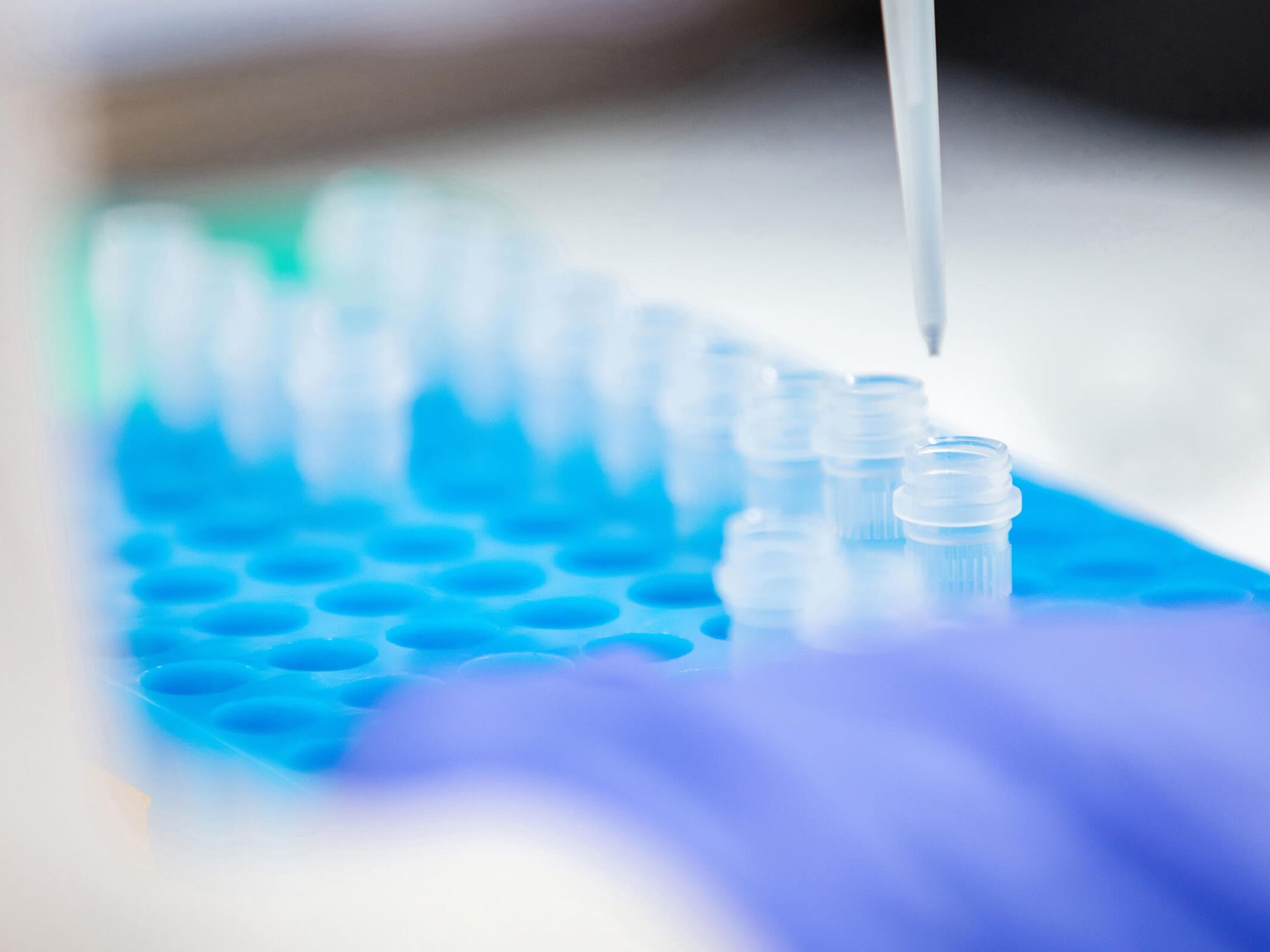
Pipette above a blue rack of tubes

XIC · MRM

Chromatograms of metanephrines at the limits of quantification: metanephrine 0.025 ng/mL, 3-methoxytyramine and dopamine 0.10 ng/mLData: SCIEX, official application material
Three chromatograms of metanephrine, 3-methoxytyramine and dopamine, with the chemical structure and concentration of each

Chromatograms of metanephrines at the limits of quantification: metanephrine 0.025 ng/mL, 3-methoxytyramine and dopamine 0.10 ng/mL · Data: SCIEX, official application material

Pharma and biopharma

The analytical challenge

Ever more complex molecules — oligonucleotides, peptides, antibodies and their conjugates — to be characterized: confirmation of sequence and modifications, impurities and degradation products, with documentation that stands up to inspection.

The DaSP approach

High-resolution spectra read together with the laboratory: isotopic profile, sequence confirmation, modifications. The method is documented and transferred, so it stands up to a change of analyst and of batch.

Technologies used

QTOF and high-resolution systems for characterization; triple quadrupole systems for the quantitation of impurities and metabolites.

Ask for the application note
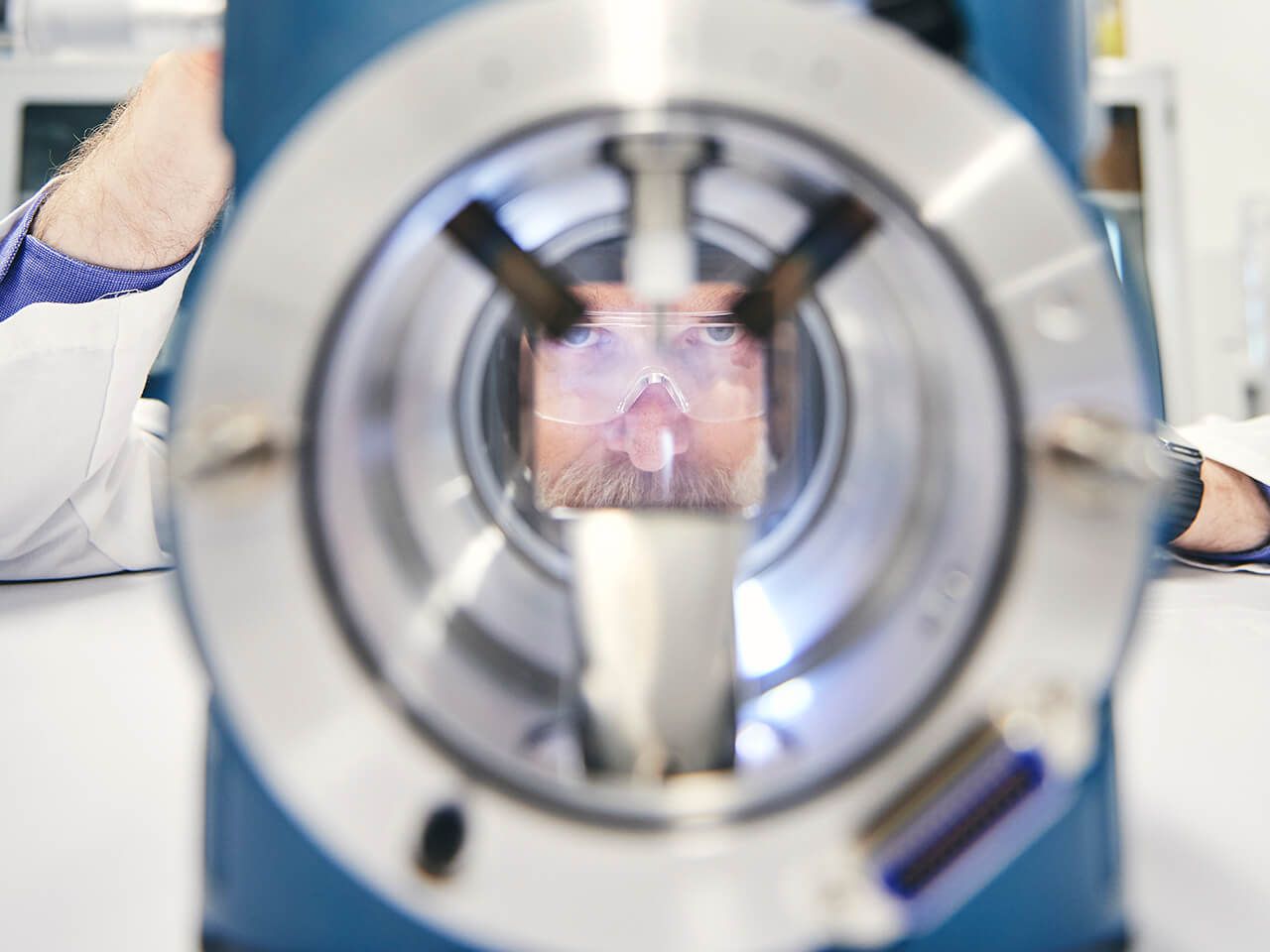
Close-up of the ion source of a mass spectrometer, with a technician looking through the viewing window

MS spectrum · MS/MS

Mass spectrum of a therapeutic oligonucleotide (nusinersen) with sequence confirmation by MS/MS and the S→O conversionData: SCIEX, official application material
Mass spectrum of the oligonucleotide nusinersen with the isotopic profile and, in the inset, the sequence confirmation by MS/MS

Mass spectrum of a therapeutic oligonucleotide (nusinersen) with sequence confirmation by MS/MS and the S→O conversion · Data: SCIEX, official application material

The technologies we use

  1. Triple quadrupole systemsTargeted quantitation in complex matrices: residues, contaminants, drugs, hormones.
  2. QTRAP systemsTriple quadrupole with linear ion trap: confirmation and quantitation in the same method.
  3. QTOF and high-resolution systemsScreening of unknowns, characterization, accurate-mass confirmation.
  4. Echo MS+Sample introduction without chromatography, for high-throughput analysis.
  5. LC systemsExionLC liquid chromatography, from routine methods to microflow.
  6. SoftwareSCIEX OS for acquisition and processing; instrument status monitoring software.

The questions we get asked

Do you only do these four applications?

No. The four sectors are the ones laboratories most often come to us for. If your matrix or analyte is not listed here, the path is the same: first the feasibility study, then method development.

Aren’t the manufacturer’s application notes enough?

They are the starting point. An application note is born on one matrix and one instrument; the laboratory’s method has to stand up to its own matrices, its own limits and its own audit. That is the work we do together.

Which instrument do we need?

It depends on the analytical question: analyte, matrix, limit to be met, number of samples per day. You start from there, and the instrument is the consequence. That is why this page is organized by sector and not by model.

Need a new method, or one to validate? The analytical methods page describes how we work, from the feasibility study to the validation dossier.

Bring us your matrix

Tell us your analytical challenge: analyte, matrix, limit to be met. A DaSP specialist will answer you.